Charging Infrastructure: Beyond Plugging In
Why this matters now
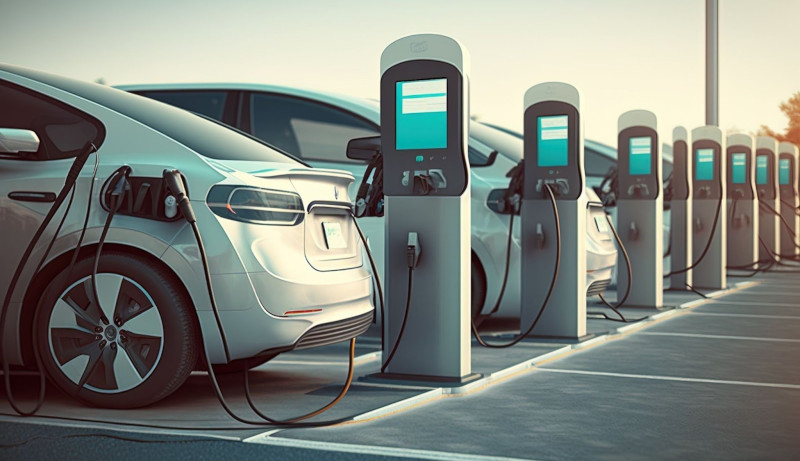
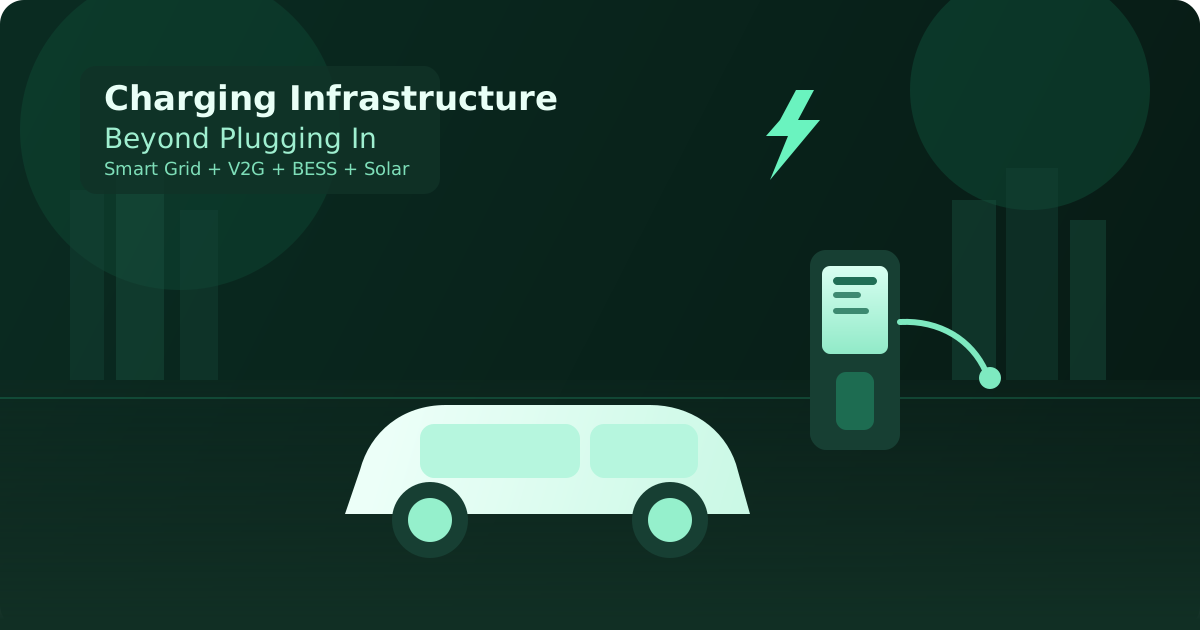
Charging infrastructure has evolved far beyond the idea of simply connecting a cable to a vehicle. Modern EV charging is part of a connected, intelligent energy ecosystem that balances power demand, user convenience, grid stability, and renewable integration. Today's charging ecosystems involve:
Key components of modern charging ecosystems
- Public fast chargers on highways and city streets, enabling long-distance travel and supporting the growing number of EV drivers with high-power DC charging.
- Home chargers with smart scheduling to use off-peak power, reducing electricity costs and minimizing stress on the grid.
- Bidirectional charging (V2G/V2H) that lets EVs export power back to the grid or your home storage system, turning cars into mobile batteries.
- Solar-powered charging stations that pair renewable generation with EV charging to reduce grid loads and emissions.
BESS and site-level optimization
In addition, many modern charging sites now integrate battery energy storage systems (BESS). These onsite batteries store excess solar energy or low-cost grid electricity and release it during peak demand. This helps stabilize the grid, enables faster charging in areas with limited grid capacity, and reduces infrastructure upgrade costs for operators.
Operations and reliability at scale
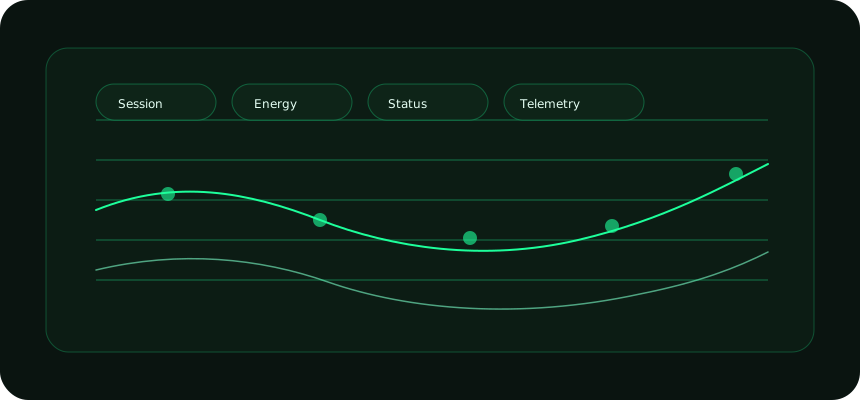
Beyond these visible components, modern infrastructure also includes dynamic load management systems that balance power between multiple chargers, roaming platforms that allow drivers to charge across different networks, and real-time monitoring tools that help operators maintain uptime and performance.
Conclusion
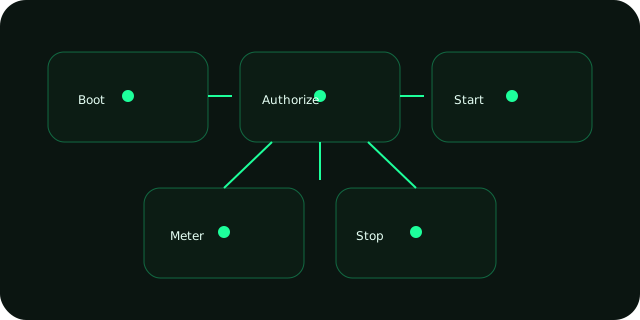
All of this requires not just hardware, but intelligent software and open standards that ensure chargers can communicate securely, receive remote updates, process payments, and integrate with energy management systems. As EV adoption accelerates, reliable and interoperable charging infrastructure becomes just as important as the vehicles themselves.